

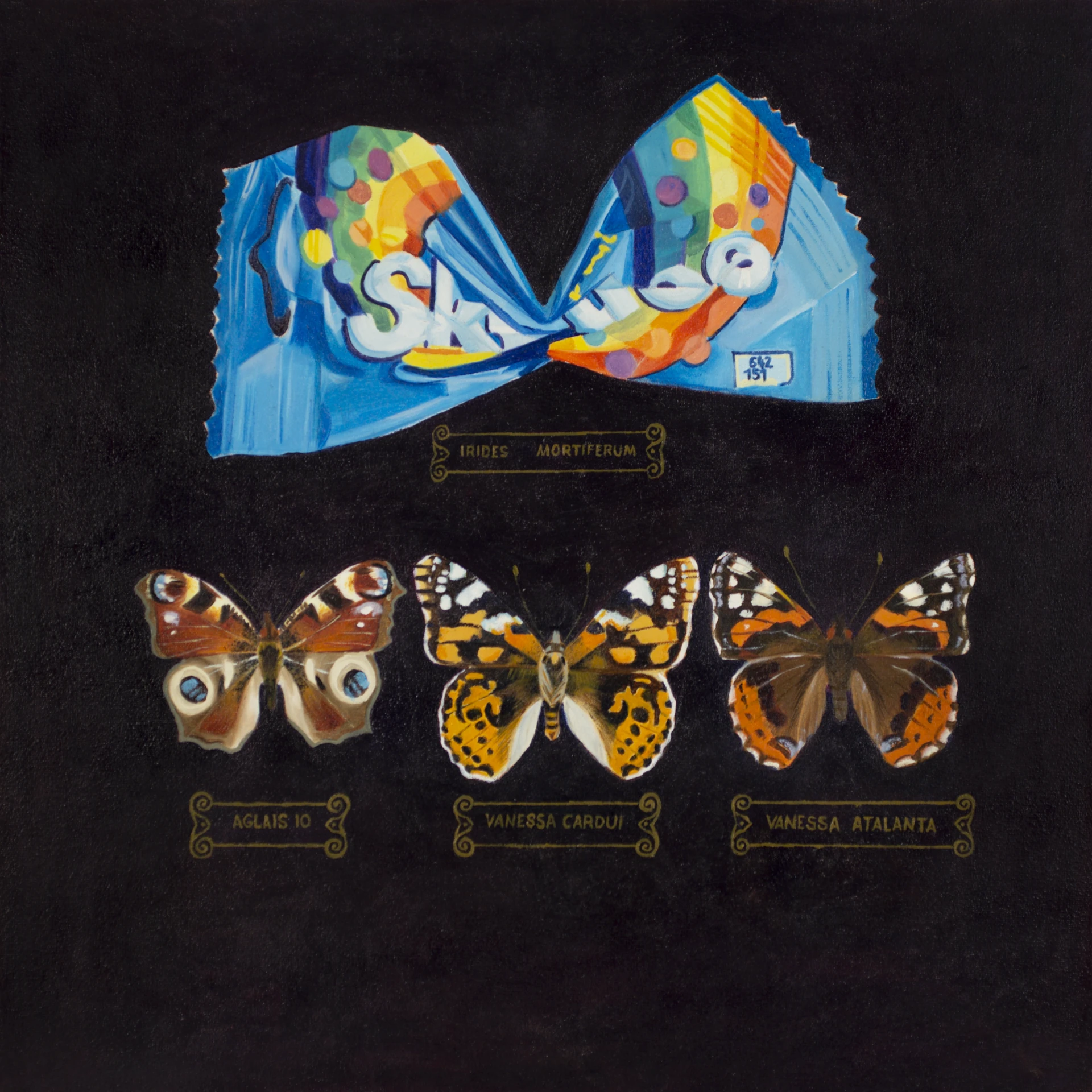
This evocative oil painting, part of a series exploring the intersection of consumer culture and nature, presents a striking contrast between the organic and the artificial. Titled Irides mortiferum — a fictitious Latin name that translates to “Deadly Iridescence” — the piece alludes to the deceptive allure of modern consumerism and its hidden consequences.
At the top of the composition, a butterfly emerges, but unlike its natural counterparts, it is not made of delicate wings. Instead, it is crafted from the crumpled wrapper of a Skittles candy packet. The bright, artificial hues of blue, red, yellow, and orange, combined with the glossy, plastic-like texture, stand in stark opposition to the three natural butterflies below. These real specimens — Aglais io (the peacock butterfly), Vanessa cardui (the painted lady), and Vanessa atalanta (the red admiral) — are rendered in rich, earthy tones of brown, orange, and muted gold.
The synthetic butterfly dominates the arrangement, positioned above the real ones, almost as if asserting its superiority. It is a fleeting beauty — iridescent and seductive — but ultimately lifeless and disposable. The real butterflies seem overshadowed, threatened by the artificial invader.
Through this composition, the artist critiques the throwaway culture of modern consumption. The Skittles wrapper represents mass-produced pleasure, designed to dazzle with color and promise sweetness, but offering nothing of lasting value. Once the candy is consumed, its remnants become waste, lingering in the environment long after the brief moment of enjoyment has passed.
By placing the artificial butterfly in a position of prominence, Irides mortiferum questions our values: Have we come to prize what is synthetic over what is real? Do we allow the fleeting allure of consumer goods to overshadow the beauty of the natural world? The painting serves as both a warning and a meditation on the delicate balance between indulgence and responsibility.