

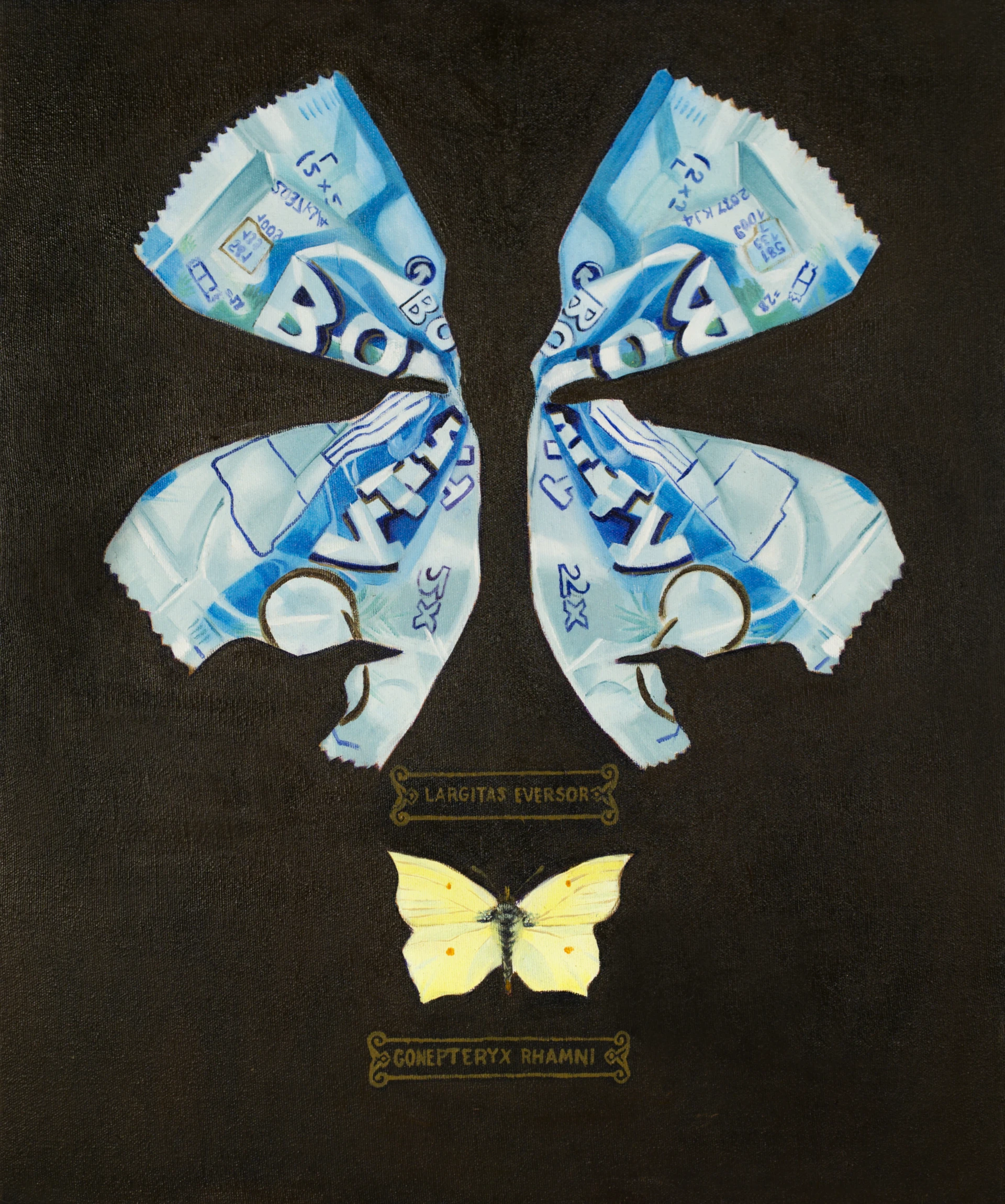
This oil painting presents a juxtaposition between nature and artificiality, urging the viewer to reflect on the consequences of consumer culture. At the center of the composition, a towering butterfly spreads its wings — yet it is not a real butterfly, but a cleverly folded and sculpted assemblage of Bounty chocolate bar wrappers. The glossy blue and white packaging, crinkled and creased, mimics the delicate structure of butterfly wings.
Below this artificial butterfly, a real one — the pale yellow Brimstone (Gonepteryx rhamni)— rests quietly, pinned as though part of a collector’s display. The piece recalls the practice of butterfly collecting, where specimens are caught, killed, and meticulously displayed in glass cases. However, in this case, the towering paper butterfly is not the one that has perished — it is the predator, the corrupter. Its wings, fashioned from a symbol of mass-produced indulgence, hint at the fleeting pleasure of consumer goods, which tempt us from store shelves, offering sweetness and comfort. But once consumed, the remnants — the wrappers — lose all value and are discarded, often left to pollute nature.
The title inscribed beneath the artificial butterfly, Largitas eversor — a fictitious Latin name — translates roughly to “Abundance Destroyer.” This name plays on the dual nature of the object: the packaging represents indulgence, comfort, and instant gratification, yet once discarded, it becomes waste — permanent, non-biodegradable, and harmful to the environment. Rendered in oil on canvas — a medium historically associated with classical beauty and permanence — the painting elevates a mundane object, turning it into a symbol of excess and destruction. The deep, dark background isolates the subjects, heightening their presence and giving them an almost sacred aura.
Through this fusion of hyperrealism, surrealism, and environmental commentary, the artist transforms a simple candy wrapper into a powerful metaphor for the dangers of mass consumption.